Most small businesses don't have a lead problem; they have a follow-through problem. People already ask about prices, start orders, request quotes and say "I'll think about it". The sales that slip away there are the cheapest ones you will ever win back, because you already paid to get those people's attention.
So the fastest way to increase sales usually isn't more traffic. It is answering faster, following up, making it easier to buy, and bringing customers back. Below are 15 moves in that order, from the quickest wins to the longer plays, with what each needs to work.
Answer faster
1. Reply to new leads in minutes, not hours
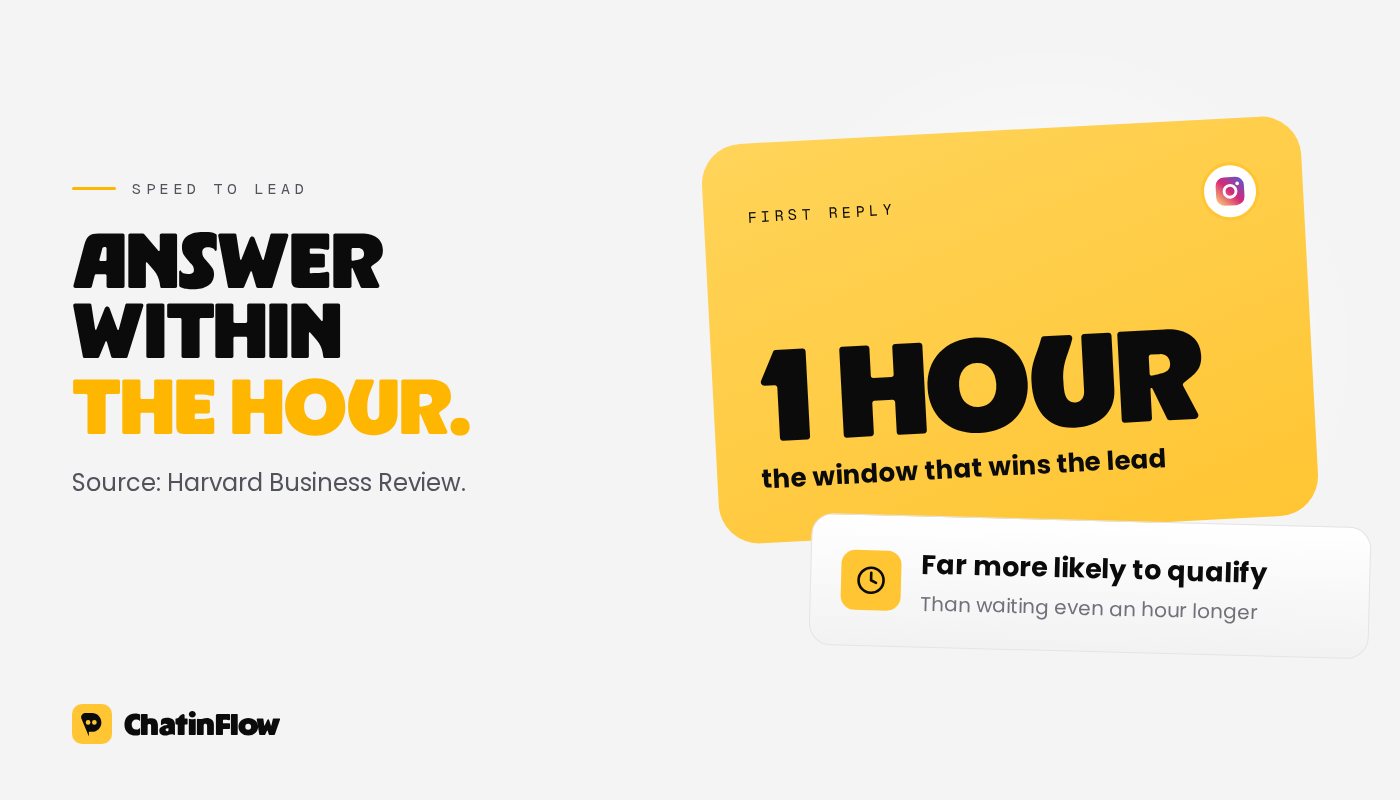
Research published in Harvard Business Review audited how fast companies answered a web lead. Those that tried to reach the lead within an hour were far more likely to qualify it than those that waited even one hour longer, yet many companies took more than a day or never answered at all. Speed matters because interest fades and because the buyer is asking your competitors at the same time.
For messages that arrive at any hour, an instant first reply that answers the common questions and promises a person when needed keeps the lead warm. In ChatinFlow, flows answer Instagram, WhatsApp, Messenger and website chat messages right away, and the team picks up from the same inbox.
2. Answer the question that stops the sale
Every business has five questions that come before almost every purchase: price, availability, delivery, how it works, what if it doesn't fit. Put the answers where people ask: in your DMs, in your chat, as buttons. A customer who has to wait for a basic answer often doesn't come back.
3. Be where your customers write
If your customers write on WhatsApp and you only check email, you lose them. Look at where questions actually arrive (Instagram DMs, WhatsApp, website chat, comments) and make sure each one is answered from the same place, so nothing waits in an app nobody opened.
Follow up
4. Follow up more than once
Many sales happen after the second or third contact. "I'll think about it" usually means "remind me", not "no". Set a rule: every quote, every unfinished order, every "maybe" gets a follow-up, with a date. A task with a due date, or a deal moving through a pipeline, keeps it from depending on memory.
5. Recover abandoned orders
People who started checkout and left are your warmest leads. A reminder with their filled cart and an easy way to ask a question brings a share of them back. Keep the first reminder helpful rather than discounted, so customers don't learn to wait for a coupon.
6. Re-engage past leads and customers
Go through the people who asked but didn't buy in the last few months, and the customers who bought once. A short, personal message with something new (a new product, a restock, a seasonal offer) is often the easiest revenue of the month. Use the channels where they agreed to hear from you.
Make it easier to buy
7. Remove steps
Count the steps between "I want this" and "paid". Every extra page, form field and account creation loses buyers, especially on a phone. If people find you on social media, let them buy from the chat: a buy button in the conversation that opens checkout is one step instead of five.
8. Show the price
"Contact us for pricing" filters out buyers who would have paid. If you can show a price or a starting price, show it. If every job is custom, show a typical range or examples, and offer a quick quote.
9. Make the offer clearer, not cheaper
Before you cut prices, check whether people understand what they get. A clear promise ("Your logo in 5 days, 3 revisions included"), what is included, and what happens after they pay often sell better than a discount.
10. Reduce the risk
Guarantees, free returns, a trial, a first session at a lower price: anything that makes the first purchase feel safe raises conversion. Make sure you can afford what you promise.
Sell more to the same customers
11. Suggest the next thing at the right moment
The best time to suggest a related product is right after a purchase or at the moment of use: refills when they run out, the accessory that goes with the product, the next level of the service. A post-purchase message can do this automatically.
12. Ask happy customers for referrals and reviews
A recommendation from a friend is the most trusted form of marketing. Ask customers who are clearly happy (for example, after a high satisfaction score) for a review or a referral, and make it easy: one link, one code. ChatinFlow's satisfaction questions and "bring a friend" step can do both inside the chat.
13. Create reasons to come back
Seasonal launches, restocks, members-only offers, an email list with something useful every week. Repeat customers cost far less to win than new ones.
Know what works
14. Track the funnel, not just the total
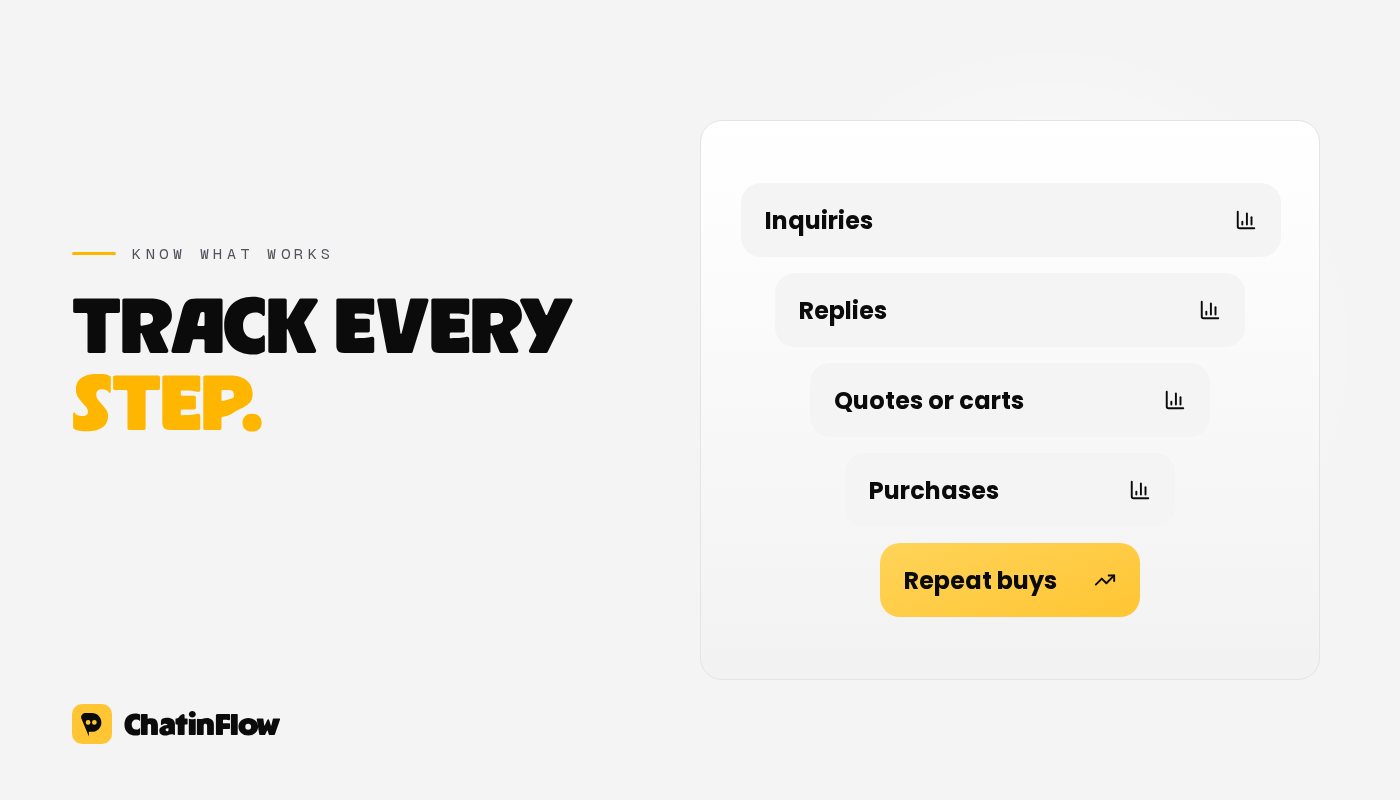
Total sales tell you whether you grew, not why. Track each step: inquiries, replies, quotes or carts, purchases, repeat purchases. The step with the biggest drop is where the next improvement is. In ChatinFlow, a Record a conversion step counts a sale with its value inside any flow, so you can see which posts, ads and conversations bring revenue.
15. Spend more on what already works
Once you know which channel, post type or offer brings paying customers, put more of your time and budget there, and stop what doesn't. Most growth comes from doing more of the few things that work.
Where to start
If you only do three things this month:
- Make sure every message gets a first answer within minutes, at any hour.
- Follow up on every open quote and unfinished order.
- Add a buy button or booking link where people ask about prices.
Those three usually move sales faster than any new campaign, because they win the customers you already have. For a deeper look at the social side, read how e-commerce brands grow with social media automation, and for a team inbox and flows in one place, see ChatinFlow pricing.
Sources
- James B. Oldroyd, Kristina McElheran and David Elkington, The Short Life of Online Sales Leads, Harvard Business Review, March 2011. Checked October 2026.
邮件订阅
新流程 直达你的收件箱。
好用的流程、新的玩法手册,以及 ChatinFlow 的更新。没有垃圾邮件,一键即可退订。
你可能也喜欢
问题与解答
关于这篇文章有疑问?ChatinFlow 团队在这里解答。
ChatinFlow 团队
还没有人提问。来问第一个问题吧,我们就在这里回答。