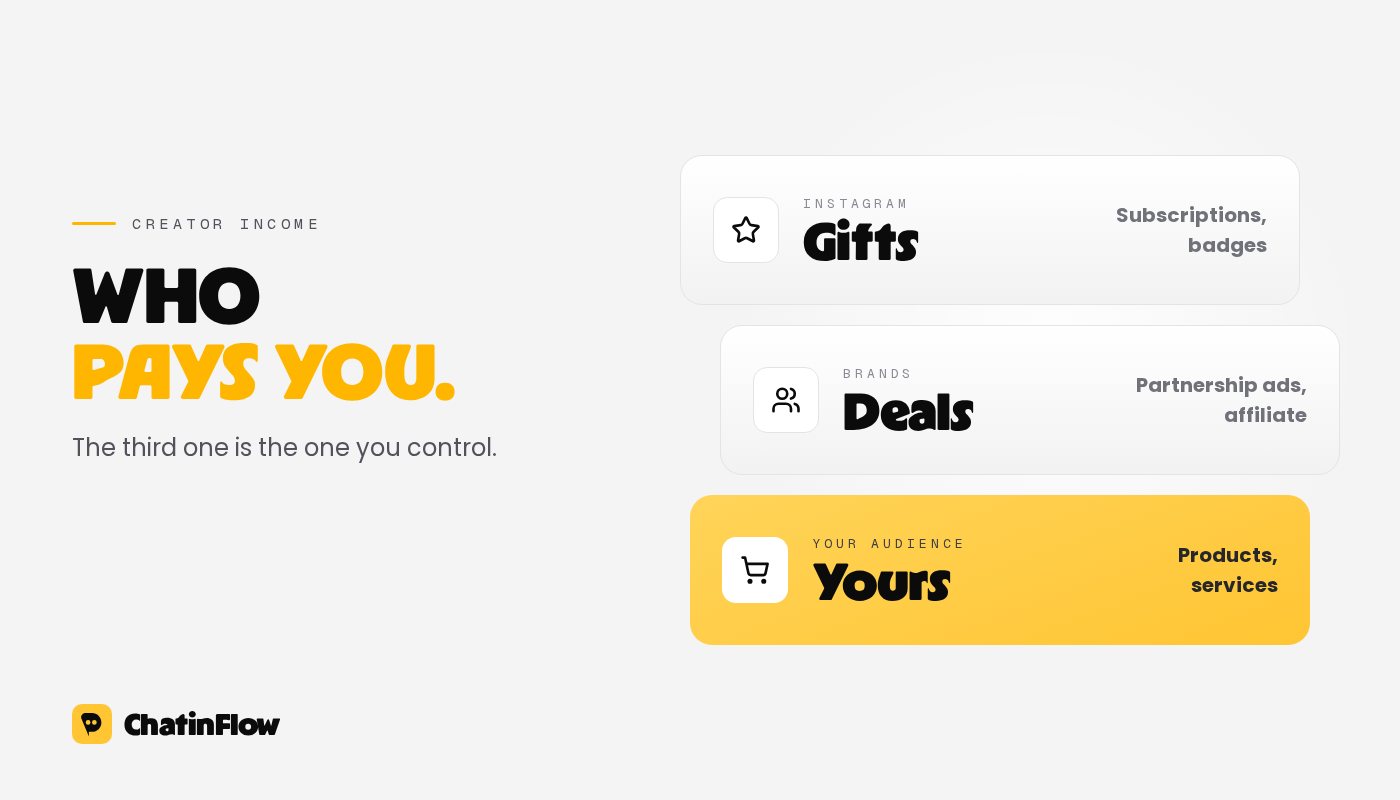
In 2026, creators make money on Instagram in three ways: Instagram pays them (subscriptions, gifts, badges), brands pay them (sponsored posts, partnership ads, affiliate links), or their audience pays them directly for something they sell (products, services, coaching, communities). The first two depend on Instagram and on brands. The third is the one you control, and for most creators it ends up being the biggest.
This guide covers every way, who each one suits, what you need to start, and how to turn followers into income without a huge audience.
The honest math first
Income on Instagram isn't about follower count; it is about how many people trust you enough to act. An account with a few thousand engaged followers in a clear niche can earn more than an account with a hundred thousand followers who came for random viral videos. Every method below works better with a narrow audience that knows exactly what you are good at.
1. Instagram's own tools
Instagram pays creators directly through a few features, managed in the professional dashboard:
- Subscriptions. Followers pay you monthly for subscriber-only content: posts, stories, lives and a badge next to their name. You set the price.
- Gifts on reels. Viewers buy stars and send them as gifts on your reels; you receive a payout for them.
- Badges on Live. Viewers buy badges during your live, and their comments are highlighted.
Eligibility depends on your country, your account type, your follower count and Meta's partner monetization policies, and it changes over time. Open Professional dashboard in the app to see which tools you can turn on today.
Best for: creators with a loyal audience who already show up for lives and stories. On their own these tools rarely replace an income, but they add up well on top of the others.
2. Brand deals
Brands pay you to feature their product. The ways in:
- Instagram's creator marketplace, where brands search for creators by niche and audience, and you can set your interests.
- Partnership ads, where a brand runs your sponsored post as an ad to people beyond your followers. Brands like this because it performs like an ad and looks like content, and it makes you more valuable to them.
- Direct pitches. Make a one-page media kit: who your audience is, your best posts, what you offer. Pitch brands your audience already uses.
Two rules: disclose every paid partnership clearly (Instagram's paid partnership label, plus "ad" or "sponsored" where the law asks for it; in the US, the FTC's guidance applies), and only promote what you would recommend for free. Your audience's trust is the asset brands are paying for.
3. Affiliate links
You earn a commission when someone buys through your link. Most big retailers and many software companies run affiliate programs. Affiliate income works best for "what I use" content: gear, tools, apps, routines.
The common problem is the link: "link in bio" loses most people. A comment keyword fixes that: the viewer comments GEAR, and the link arrives in their DMs right away. See our comment-to-DM guide.
4. Your own digital products
Templates, presets, ebooks, guides, recipes, workout plans, courses. You make them once and sell them again and again, and you keep most of the price.
The fastest way to sell them on Instagram is inside the DM: a reel that shows the result, a keyword, a free sample in the first message, the price, and a buy button that opens checkout. In ChatinFlow, the Buy button step takes payment through your own Stripe or PayPal account and sends the download once the payment is confirmed. The full flow is in how to sell digital products in Instagram DMs.
5. Services and coaching
If people ask you for advice, sell it: coaching calls, audits, done-for-you services, workshops. Services pay well per customer and need the smallest audience of any method here: a few clients a month can be a real income.
The path is a conversation: someone comments or DMs, you ask two or three questions to see whether you can help, and you send a booking link to the people who fit. A DM flow can ask the questions and send the link, so you only spend time on calls with people who are a match.
6. Paid communities and memberships
A private group, a course with a community, a monthly membership. People pay to be around others like them and to get closer access to you. This works best when your audience shares a goal (learning a skill, a fitness challenge, a business stage).
7. Content for brands, without posting it
Brands buy content from creators to use in their own ads and pages, often called UGC. You are paid for the video, not for your reach, so follower count matters much less. Your Instagram becomes the portfolio.
8. Lives, events and launches
Lives sell. People who show up live trust you more, ask questions in real time and buy when you open a product or a cohort. Pair a live with a keyword so every viewer who comments gets the link in their DMs while you are still talking: see Instagram Live comments to DM.
Which one should you start with?
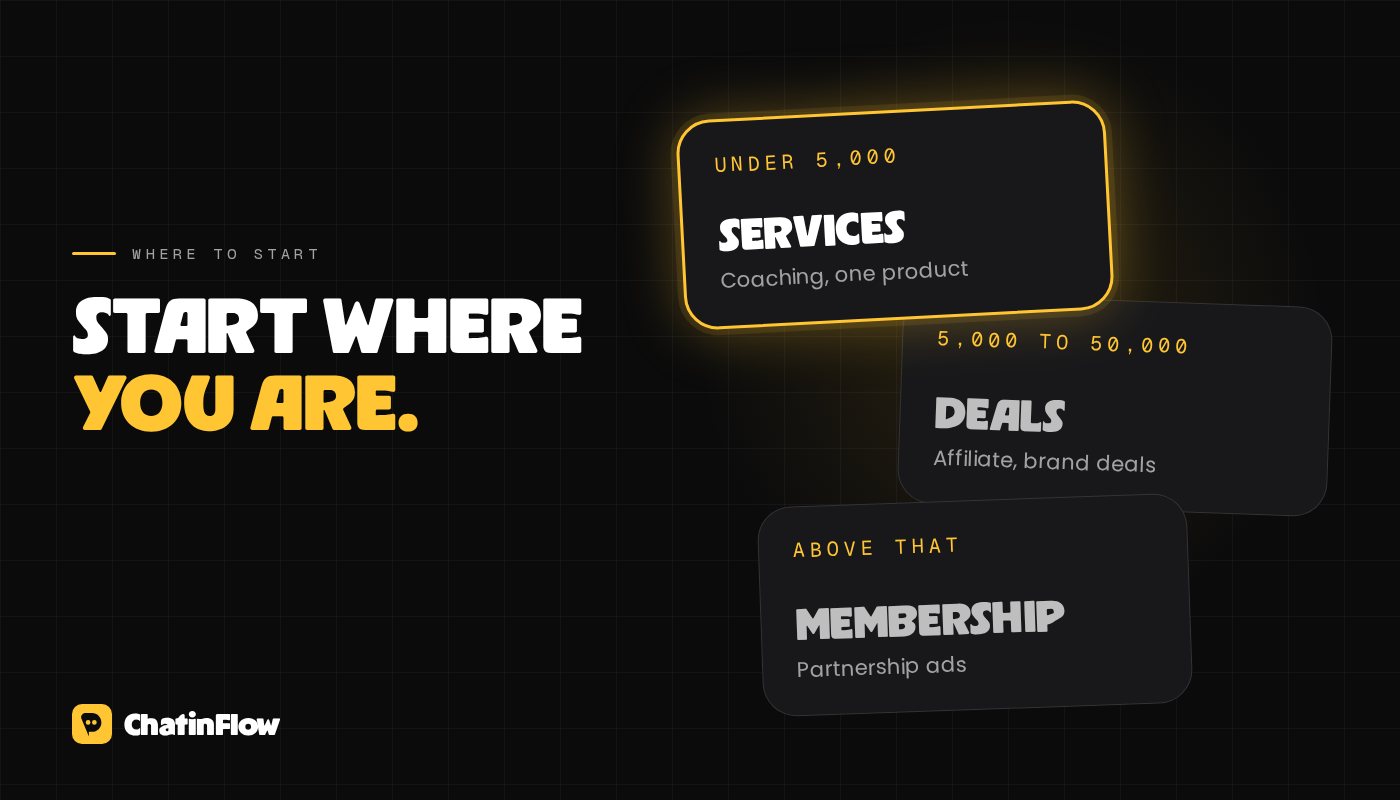
- Under 5,000 followers: services, coaching or one small digital product. You don't need reach to sell to people who already trust you.
- 5,000 to 50,000: add affiliate links, brand deals in your niche and a bigger product.
- Above that: a membership, partnership ads with brands and Instagram's own tools on top.
At every stage, start an email list. Instagram can change its feed tomorrow; your list stays. See grow your email list from Instagram.
The system behind the income
Most creators who earn well on Instagram run the same simple system:
- Content that shows what they are good at, aimed at one kind of person.
- A keyword on every post that promises something, so interested viewers become conversations.
- A DM flow that delivers, asks one question and leads to the next step: a product, a booking, a list.
- An email list for launches and for the days Instagram is quiet.
- One core offer they improve over time, instead of ten half-built ones.
None of this needs a huge account. It needs a clear audience, a real offer and a way to answer everyone who raises their hand. For creators, the ChatinFlow for creators page shows the tools for steps 2 and 3.
Sources
- Meta for Creators, Giving more creators around the world ways to earn money: subscriptions and other monetization tools. Checked October 2026.
- Federal Trade Commission, Disclosures 101 for Social Media Influencers. Checked October 2026.
邮件订阅
新流程 直达你的收件箱。
好用的流程、新的玩法手册,以及 ChatinFlow 的更新。没有垃圾邮件,一键即可退订。
你可能也喜欢

问题与解答
关于这篇文章有疑问?ChatinFlow 团队在这里解答。
ChatinFlow 团队
还没有人提问。来问第一个问题吧,我们就在这里回答。