
The full guide
Car dealership lead generation on Instagram: answer "is it still available?" and book test drives in the DMs
Answer "is it still available?" with each car's price and history, book test drives, start trade-in valuations and give every buyer a salesperson.
Every car you post brings the same five words: "Is it still available?". Then "what's the price?", "how many miles?", "can I test drive it Saturday?". A salesperson copies the specs fifty times a day, the buyer who wrote at 10 pm hears back the next afternoon, and by then they've messaged three other dealers. ChatinFlow answers each question with the car's price, mileage and history, books a test drive from your calendar, starts a trade-in valuation in the chat and assigns every serious buyer to a salesperson with the car already in the notes. This guide shows independent and franchise dealers how to turn Instagram and Facebook listing questions into test drives and sales.
How to answer "is it still available?" on Instagram and Facebook
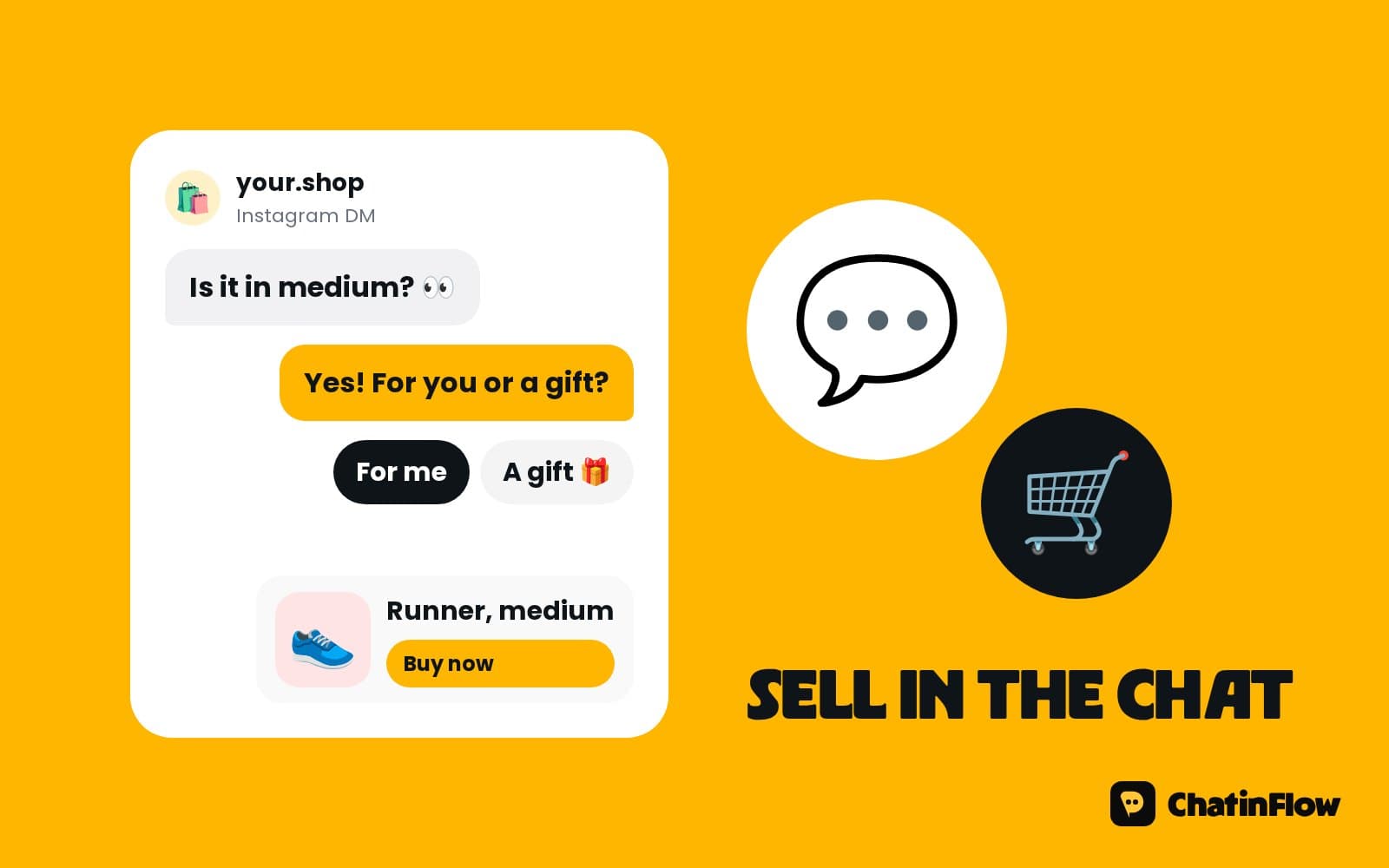
"Is it still available?" is the most common message a dealer gets, and the slowest to answer by hand because each one needs a check. Automation answers in seconds and keeps the conversation going:
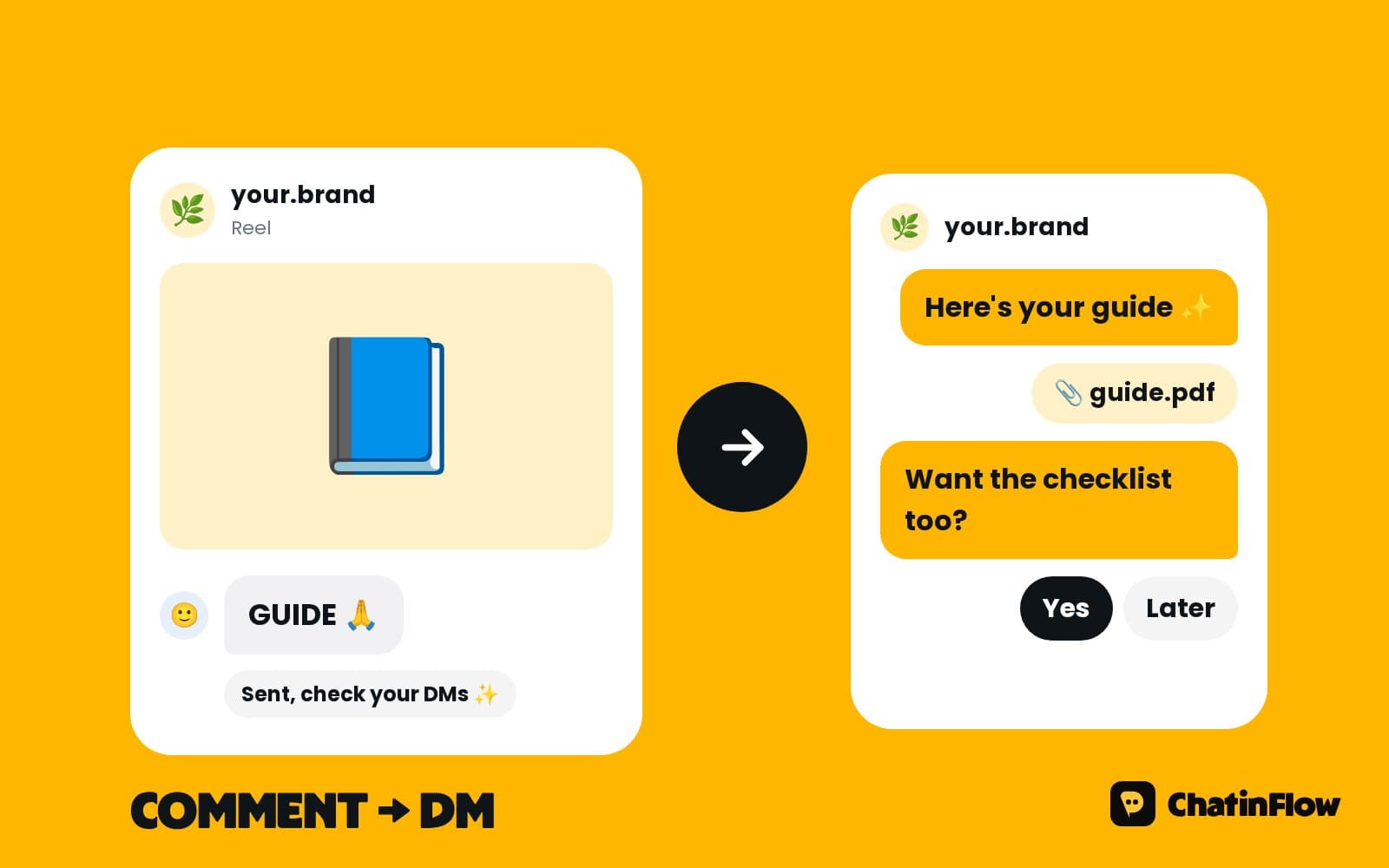
- A buyer comments on the listing or messages about it on Instagram, Messenger or your website chat.
- A private reply sends the car's card: price, mileage, year, history, and a button to book a test drive.
- The flow asks one question: "Would you like to see it this week?" or "Are you trading in a car?".
- The conversation is assigned to a salesperson with the car in the notes.
When a car is sold, change its listing flow to say so and offer similar cars, instead of letting "is it still available?" go unanswered.
One keyword per listing, or ask which car they mean
Dealers post a lot of stock. Two ways to keep the answers right:
- A keyword per listing. Each listing post gets its own automation and its own card with that car's price and details. A comment under the BMW post gets the BMW.
- Ask which car. For a general post, such as "new arrivals this week", the flow asks which car they mean with buttons, then sends that card.
Keep the price and mileage in the card current. When the price changes, change it in one place.
What details buyers want before they visit
The questions that decide whether a buyer comes in:
- The price, and whether it's negotiable.
- The mileage and the year.
- The history: owners, service record, accidents.
- The warranty and what it covers.
- Finance: whether you offer it.
- Trade-in: whether you take part-exchange.
Send the facts before anyone talks to the buyer. A buyer who already knows the mileage and history and still books a test drive is a serious buyer.
Book test drives in the chat
In Bookings, make a test drive service with its length, such as 45 minutes, and the salespeople who run it. The buyer picks a time from the free test drive slots as taps, the booking is written and the confirmation goes out in the same chat, with the car, the time, your address and a link to change or cancel. The time disappears from everyone else's options.
A reminder goes out before the test drive, so the car is washed and ready when they arrive. On Instagram and Messenger, a business can write freely for 24 hours after the buyer's last message, so a reminder for a test drive booked the same week usually lands; on WhatsApp, a template Meta approved reaches the buyer whatever the date.
Assign every car lead to a salesperson
Every buyer should have an owner. The conversation is assigned to whoever is on, or to the salesperson for that car, with the full history attached: the car, the questions, the test drive time. Nobody has to ask "which car were you asking about?".
- Round the floor. Assign to the next free salesperson so leads are shared fairly.
- By car. Assign to the salesperson who listed it.
- Hot leads first. Flag the buyers who booked a test drive as priority, so they lead the list.
In the shared inbox, everyone sees who owns which buyer, and the automation steps aside as soon as a salesperson replies.
Trade-in valuations started in the chat
Part-exchange questions are buying signals. A trade-in flow asks:
- The make, model and year.
- The mileage.
- The condition, as taps.
- Photos, sent in the chat.
The answers are saved on a deal, so your appraiser replies with a number instead of starting with questions. A buyer who trades in is closer to buying than one who doesn't.
Car sales follow-up: price drops and new arrivals
Most buyers don't buy the first car they ask about. Tags remember which car or model each buyer wanted: SUV, under-15k, the white Golf. When you lower the price or a similar car arrives, the buyers who asked can hear first, with a test drive one tap away.
The channel rules:
- WhatsApp. Messages after the 24-hour window use an approved template, so a price drop reaches a buyer who opted in weeks ago.
- Instagram and Messenger. A broadcast reaches buyers who wrote in the last 24 hours.
Messages go out in each buyer's own time zone, and opted-out contacts are always skipped.
Finance questions: hand them to a person
Finance depends on the buyer and the lender, so the flow doesn't quote it. It can ask whether the buyer is interested in finance and pass the conversation to your finance person, with the car and the buyer's details in the notes.
A car dealer sales pipeline from the DMs
Deals track each buyer from first question to sale: asked, test drive booked, offer, sold or lost. A deal moving to a stage can start a flow, such as a thank-you after the test drive or a follow-up two days after an offer. A task can remind the salesperson to call back.
Over a month, the pipeline shows which listings bring test drives and which only bring questions.
Instagram content that brings car buyers
- Walkaround reels. Thirty seconds around the car with "Comment the model for the price".
- New arrivals. A carousel with "DM ARRIVALS for the list".
- Under-budget picks. "Five cars under 15k, comment BUDGET".
- Delivery photos, with permission, and "Comment NEXT for what just arrived".
- Service and warranty explained, for buyers worried about used cars.
Common dealer questions to automate
- "Do you deliver?"
- "What are your opening hours?"
- "Do you take card or bank transfer?"
- "Is the price negotiable?", answered your way.
- "Can I reserve it?"
Write each answer once; anything unusual goes to a salesperson.
Click-to-message ads for car dealers
An ad that opens a chat instead of a website keeps the buyer in the app they're already using. On Instagram and Messenger, a tap on a click-to-message ad can start its own flow: the ad's car card, the test drive button and the trade-in question, straight away. The buyer is tagged with the ad, so you can see which ads brought test drives and which only brought questions. Ads are created and paid for in Meta's ads tools; ChatinFlow answers the chats they start.
Car listing reply templates
Update the listing's reply the day the price changes, so an old price never goes out a hundred times.
Measure which listings sell
Likes don't sell cars. The numbers that matter come from the chats:
- Questions per listing, from the comment automations.
- Test drives booked from each listing's flow.
- Sales recorded. When a car is sold to a buyer from the chat, a conversion step records it on the contact, with the sale value.
- Response time, by salesperson, from the shared inbox.
A listing that brings fifty questions and no test drives may have the wrong price; one with ten questions and five test drives is priced right.
After the sale: service reminders and referrals
A buyer who had a good experience sends friends. After the sale, save the delivery date to the contact. A date rule can send a first-service reminder months later, on a channel that can still reach them, such as WhatsApp with an approved template. A refer-a-friend link gives each buyer a personal link to share, and the team sees which friends came through it.
Is it right for your dealership?
It suits independent and franchise dealers who post stock on Instagram, dealers who book test drives from messages, and teams with several salespeople sharing one inbox. It is not for dealers who need live stock and finance quotes from a dealer system in the chat, private sellers with one car, or sending messages to people who never contacted you.
A week-one plan for a car dealer
- Day 1. Build a card for your five most viewed cars with price, mileage and history.
- Day 2. Attach a comment automation to each listing post.
- Day 3. Create a test drive service in Bookings and add the booking step.
- Day 4. Set up assignment to your salespeople.
- Day 5. Build the trade-in flow with photos and a deal.
- Day 6. Tag buyers by the car and the kind of car they want.
- Day 7. Check which listings started the most test drives.
Mistakes dealers make with listing DMs
- "DM for price." The buyer moves to the dealer who posted it.
- Old cards. A sold car still answering "yes, available" costs trust.
- No owner. Two salespeople answer the same buyer, or none do.
- No trade-in question. It's the signal that the buyer is ready.
- Forgetting the buyers who asked. A price drop is a reason to write.
Car dealership DM automation FAQ
Can it answer for each car separately?
Yes. Each listing post can have its own keyword and its own card with that car's price and details, or the flow can ask which car they mean.
Can it quote finance?
No. Finance depends on the buyer and the lender. The flow can ask whether they're interested and pass the conversation to your finance person.
Can several salespeople share the leads?
Yes. Conversations are assigned to whoever is on, with the history attached, and you can see who owns which buyer.
Can buyers book a test drive from Facebook?
Yes. The same booking flow runs on Messenger, Instagram and your website chat, with the same test drive calendar behind it.
Sources
- Private Replies, Meta for Developers, on replying to a comment by DM within 7 days.
- Messenger Platform and IG Messaging API policy, Meta for Developers, on the 24-hour window.