
The full guide
How interior designers get clients from Instagram: turn "love this!" into qualified projects
Ask the room, budget and timeline politely in the chat, open deals for the serious inquiries, book discovery calls and keep the rest close with a style guide.
An interior designer's Instagram is a portfolio that works at night. A before-and-after of a kitchen gets two hundred comments, and most of them say "love this!", "goals!" or a heart. Somewhere among them are three people with a real room, a real budget and a real deadline, and they're the ones who wait longest for a reply because the designer is on site. ChatinFlow replies to every comment and DM, asks the room, the budget and the timeline politely in the chat, opens a deal for the serious ones, books a discovery call and gives everyone else a style guide for their email, so they come back when they're ready. This guide shows interior designers, decorators and renovation studios how to qualify leads from Instagram without sounding pushy, fill the calendar with projects they can take, and keep the rest of their audience warm.
How to get interior design clients from Instagram
The hard part isn't getting attention; your work already does that. The hard part is finding the clients inside the attention. A qualification flow does it for you:
- Someone comments ROOM under a before-and-after reel, or asks your prices in a DM or a story reply.
- A private reply thanks them and asks which room they're thinking about.
- It asks the budget range and the timing, as taps.
- Answers inside your range open a deal, assigned to the designer.
- The client books a discovery call from your calendar and sends photos of the room.
- Everyone else gets a style guide for their email and a short sequence.
A public reply under each comment, such as "Sent you a DM!", keeps the post busy and tells the next reader you answer.
How to ask about budget without sounding pushy
Budget is the question that decides whether a project fits, and the one designers are most nervous to ask. Make it feel easy:
- Explain why you ask. "So I can suggest the right way to work together."
- Offer ranges as taps. Ranges feel lighter than typing a number.
- Include a small option. An e-design package or a consultation for smaller budgets.
- Never judge the answer. Everyone gets something useful.
Answers outside your range can get a friendly alternative, such as e-design, a one-off consultation or the style guide.
What to ask in an interior design inquiry
- The room or rooms. Kitchen, living room, bedroom, whole home.
- The scope. Styling and furniture, full design, renovation.
- The budget range.
- The timing. Within three months, this year, just dreaming.
- The location, if you work in a set area.
- Photos of the space, sent in the chat.
Each answer is saved to the contact. The discovery call starts with what the room really looks like, not with twenty questions.
Qualify interior design leads into a pipeline
Qualified inquiries become deals you move from first message to discovery call to proposal to signed, with the conversation and the brief on the same card. You can see at a glance which projects are waiting for a proposal and which proposals are undecided. A deal moving to a stage can start a flow, such as a thank-you after the call; a task can remind the designer to send the proposal by Friday.
Book discovery calls in the chat
In Bookings, a discovery call is a service with its length, such as 30 minutes, and the designer who takes it. Qualified clients pick a time from your free slots as taps, and the confirmation goes out with the time, how the call works and a link to change or cancel. Ask for photos of the room before the call; they arrive in the same conversation in your inbox.
Each designer can add a calendar link once to Google Calendar, Outlook or Apple Calendar and see their calls there.
A free style guide for an email: keep future clients close
Most people who love your work aren't ready to hire you this month. Some are saving, some are buying a house, some are just dreaming. A style guide in exchange for an email keeps them close:
- The flow offers the guide: "Planning for later? Want my free guide to choosing a color palette?"
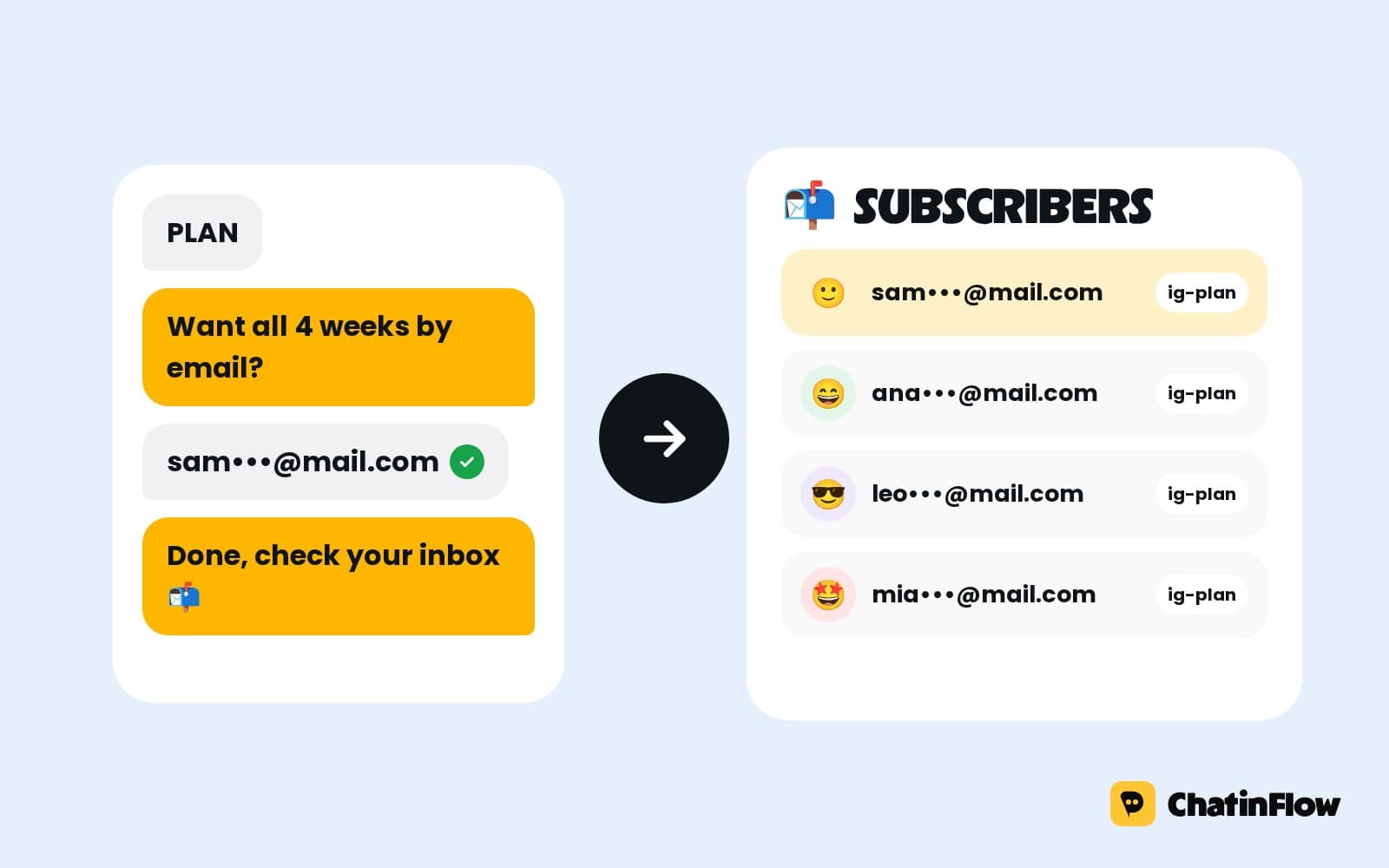
- It asks for the email in the chat, checked, and subscribes the contact with their consent.
- A short sequence follows: a message every few days with a tip, a project and an invitation to book when they're ready.
They remember you when the renovation budget finally arrives.
After the discovery call: nothing slips
When the discovery call is marked complete, the client hears when the proposal is coming, the deal moves forward and a task lands on the designer's list. A follow-up a few days after the proposal, inside each channel's rules, asks whether they have questions. Proposals that never get a follow-up are the most common way designers lose good projects.
E-design and fixed-price packages
E-design services sell a fixed-price package: a mood board, a floor plan, a shopping list. For those, the flow can explain the package, answer the usual questions and send a Buy button for the fixed price through your own Stripe or PayPal account. The money goes straight to you, and the client is tagged as paid, so the project can start.
Instagram content that brings interior design inquiries
- Before and after. The reel that works best, with "Comment ROOM for how we'd do yours".
- The process. Mood board to finished room, so people see what working with you is like.
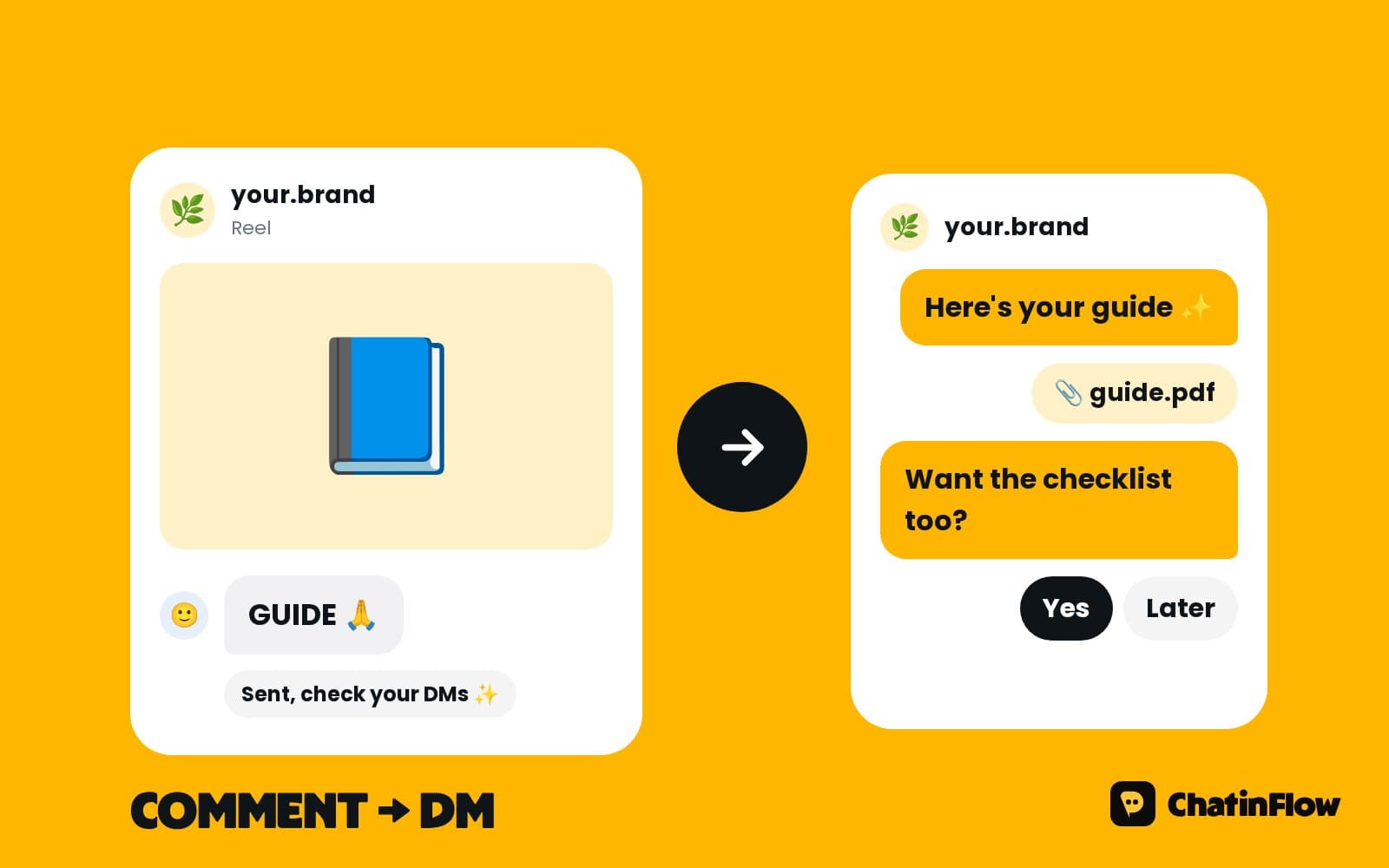
- Small changes, big difference. "Three things that change a living room", with the guide as the call to action.
- The client's story, with permission.
- Material close-ups. Tiles, fabrics, wood, with "DM SAMPLES".
Each keyword can start its own flow: ROOM qualifies, GUIDE sends the style guide.
Answer the questions every designer gets
- "How much do you charge?" How you charge, with a starting point.
- "Do you work remotely?" Your e-design option.
- "Do you work in my area?"
- "How long does a project take?"
- "Do I need to buy everything new?"
Write each answer once; anything unusual goes to the designer.
Interior designer message templates
Measure which posts bring projects
- Inquiries per post, from the comment automations.
- Qualified inquiries, from the deals opened.
- Discovery calls booked and held.
- Projects signed, recorded with a conversion step and the project value.
- Guide sign-ups, from the email step.
A reel with a thousand likes and no deals is a portfolio piece; one with fifty comments and three deals is a sales piece.
Renovation studios: kitchens and bathrooms
Kitchen and bath studios get the same "love this" comments with bigger budgets and longer timelines. Add the questions that decide a renovation: the size of the room, whether walls or plumbing move, and whether the client owns the property. Ask for a short video walk-through in the chat. The brief your designer reads before the survey is complete, and the survey itself can be booked as a service with its own length and travel buffer.
Working with clients in other cities
Many designers take e-design clients anywhere. Ask the location as a short answer, and send clients outside your area to the e-design path automatically, with its package and its Buy button. Clients in your area get the full-service path and the discovery call. Nobody gets a "sorry, we only work locally" after a long conversation.
Trade and supplier inquiries
Not every DM is a client. Suppliers, brands and press write too. A first question with buttons, such as "Are you looking to work with us on a project, or something else?", sends trade and press inquiries to a separate path with a tag, so they never clog the pipeline or the discovery call calendar.
Is it right for your studio?
It suits interior designers and decorators who post their work on Instagram, kitchen, bath and renovation studios that quote from a brief, and e-design services that sell a fixed-price package. It is not for large contractors that tender through formal bids, anyone who wants the chat to quote a renovation on its own, or sending messages to people who never contacted you.
A week-one plan for a designer
- Day 1. Write the qualification questions: room, scope, budget, timing.
- Day 2. Set up the pipeline and the discovery call in Bookings.
- Day 3. Write the style guide offer and the email step.
- Day 4. Write a three-message sequence for the guide.
- Day 5. Attach the flow to your best before-and-after with ROOM.
- Day 6. Add the follow-up after the call.
- Day 7. Check the pipeline and the guide sign-ups.
Common mistakes designers make in the DMs
- Answering "love this!" with nothing. Every comment is a chance to ask about their room.
- Avoiding the budget question. You end up on calls with projects you can't take.
- No option for later clients. They follow someone else by the time they're ready.
- No follow-up after the proposal. Silence reads as no interest.
Interior designer FAQ
Can it ask about budget without sounding pushy?
Yes. The question is yours to word, and ranges as taps feel lighter than typing a number. Answers outside your range can get a friendly alternative, like e-design or the guide.
Can clients send photos of their room?
Yes. Photos sent in the chat arrive in the conversation in your inbox, next to the brief the flow saved.
Where do qualified leads go?
Into your deal pipeline, assigned to the designer, with room, budget and timeline attached.
Can I offer a free guide for an email?
Yes. The flow asks for the email in the chat, subscribes the contact with their consent and starts a sequence.
Can it handle inquiries while I'm on site?
Yes. Every comment and DM gets an answer in seconds, the brief is saved, and the serious inquiries wait for you as deals with the photos attached.
Can several designers share the leads?
Yes. Deals are assigned to a designer, conversations sit in the shared inbox, and each designer's discovery calls come from their own free times.
Sources
- Private Replies, Meta for Developers, on replying to a comment by DM within 7 days.
- Messenger Platform and IG Messaging API policy, Meta for Developers, on the 24-hour window.