"Sends" are the times people share your post or reel with someone in a DM. Adam Mosseri, the head of Instagram, has named sends per reach as one of the three signals that carry the most weight in ranking, next to watch time and likes per reach. Sends matter most for reaching people who don't follow you yet. In 2026, that makes the DM the place where reach is earned, not only where sales happen.
This article explains what Instagram has said, what it means for the content you make, and where DM automation fits in, including what it does not do.
What Instagram has said
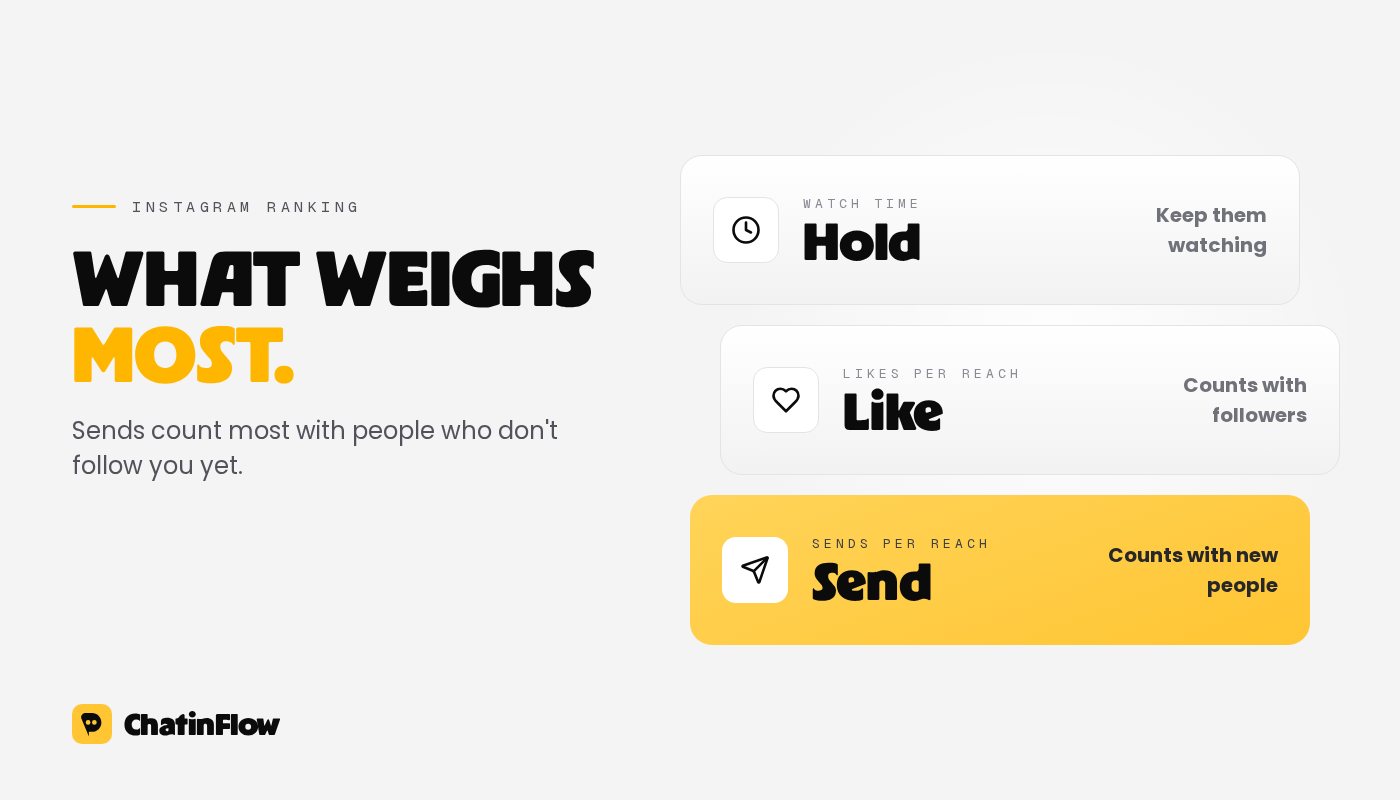
- In 2024, Mosseri said that sends per reach had become one of the most important signals Instagram uses to rank content. Sends per reach is the number of people who sent your post to someone, divided by the number of people who saw it.
- In January 2025, in a video series about how ranking works, he named the three signals with the most weight: watch time, likes per reach and sends per reach. Likes count slightly more for content shown to your followers. Sends count slightly more for content shown to people who don't follow you.
- In April 2024, Instagram also changed its recommendations to favor original content: every eligible post is first shown to a small group of people likely to enjoy it, followers or not, and the posts that do well there reach wider groups. Reposts of other people's work get replaced by the original, and accounts that mostly repost are left out of recommendations.
Put together: a new reel is tested on a small audience, and one of the clearest signs it deserves more is people sending it to friends.
Why sends say so much
A like takes one tap and costs nothing. A send means the viewer thought of a specific person and put your post in front of them. It is a recommendation, made in private, which is exactly what Instagram's own recommendations try to imitate. It also brings a new viewer who arrives through someone they trust.
Content people send
Sends come from posts that are useful or meaningful to someone else, not only to the viewer:
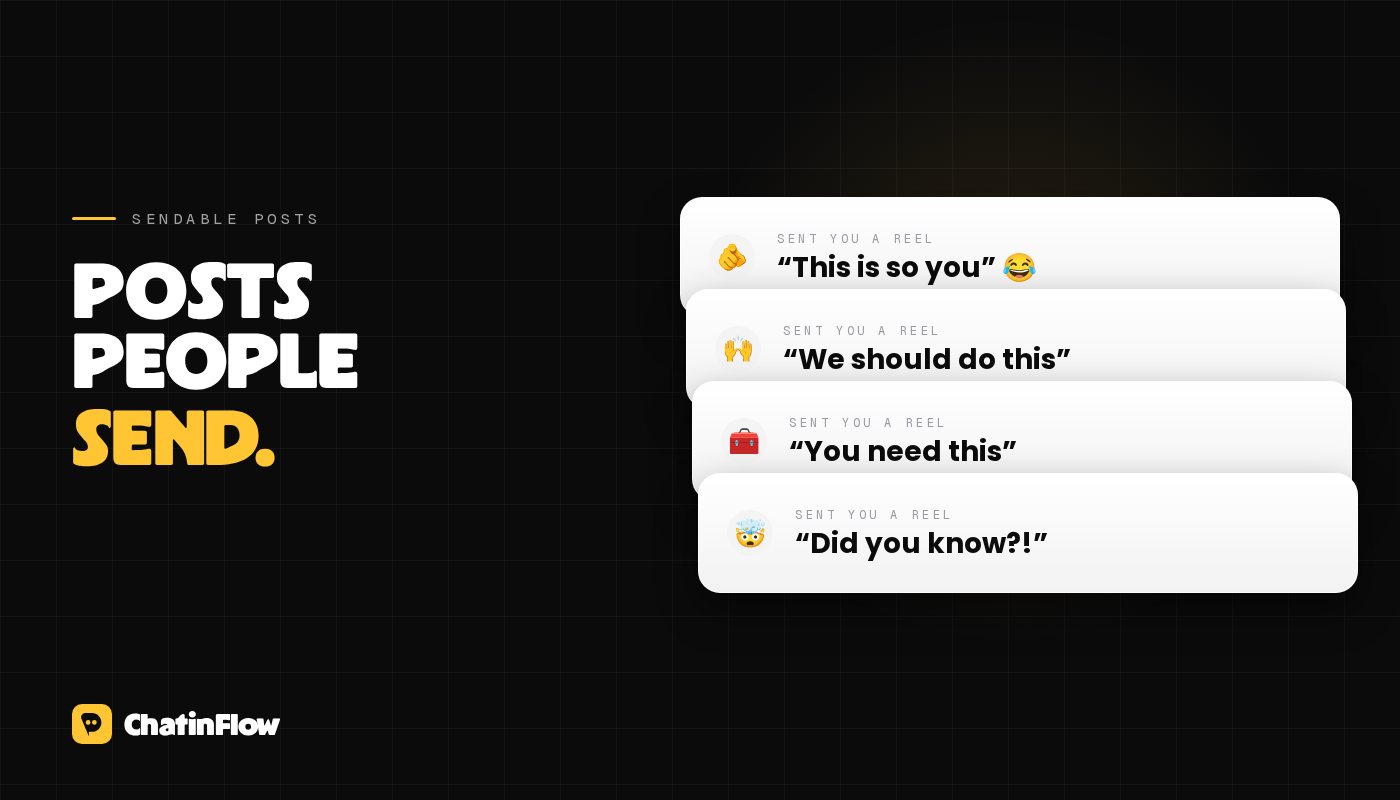
- "This is so you." Relatable situations, inside jokes of a niche, a personality type. People send these to the friend they describe.
- "We should do this." Recipes, trips, date ideas, workouts, events. People send them to whoever they would do it with.
- "You need this." A fix for a common problem, a checklist, a tool, a mistake to avoid. People send it to the friend who has the problem.
- "Did you know?" A surprising fact or a clear explanation of something confusing in your field.
A direct line helps: "Send this to the friend who still...", or "Share with the person you'd do this with". It is an instruction, like a comment keyword, and it works best when it names a specific person.
Where comment-to-DM fits, and where it doesn't
It is easy to mix the two up, so to be precise:
- A send is a viewer sharing your post with a friend. That is the ranking signal.
- A comment-to-DM automation is you answering a comment with a private message. That is a conversation with someone who already saw the post.
Instagram hasn't said that private replies to comments change ranking, and you shouldn't build a strategy on the idea that they do. What comment-to-DM does is turn reach into something you keep: a conversation, an email address, a booking, a sale. Without it, a reel that reaches 200,000 people leaves you with views and a few new followers.
The two can work together. When someone comments your keyword, your private reply can deliver what you promised and add one line: "Know someone who needs this too? Send them the post, they can comment GUIDE as well." It is a natural moment to ask, because the person just got something useful. Keep it to one line, and don't make the delivery depend on sharing.
How to read your numbers
In your post insights, sends show up as shares. Two habits make the number useful:
- Compare per reach, not in total. 100 shares on a post seen by 5,000 people is a much stronger signal than 300 on a post seen by 200,000. Divide shares by accounts reached.
- Look at the first hours. Ranking starts with a small test audience, so the share rate early on tells you whether a post has a chance to travel.
If a format gets a high share rate, make more of it. If a post gets reach but few shares, the topic interested people but didn't make them think of anyone; the next version can name that person outright.
A weekly routine
- Pick the two posts with the best shares per reach from the last month and note what they have in common.
- Make one new post in that format, with a line that names who to send it to.
- Add a comment keyword to the posts that promise something (a guide, a list, a link), so the reach turns into conversations. Our comment-to-DM guide covers the setup.
- Test new hooks with trial reels before you show them to your followers.
Sources
- Social Media Today, Instagram shares algorithm insights for 2025: watch time, likes per reach and sends per reach; likes weigh more for connected content, sends for unconnected content. Checked October 2026.
- Lindsey Gamble, Instagram's focus on sends per reach: a timeline. Checked October 2026.
- Instagram for Creators, Helping creators find new audiences (April 30, 2024): recommendations tested on small audiences first, original content over reposts. Checked October 2026.
By email
New flows, in your inbox.
The flows that work, new playbooks and what changed in ChatinFlow. No spam, and you can leave in one tap.
You may like

Questions and answers
Ask about this post. The ChatinFlow team answers here.
ChatinFlow team
No questions yet. Ask the first one, we answer right here.