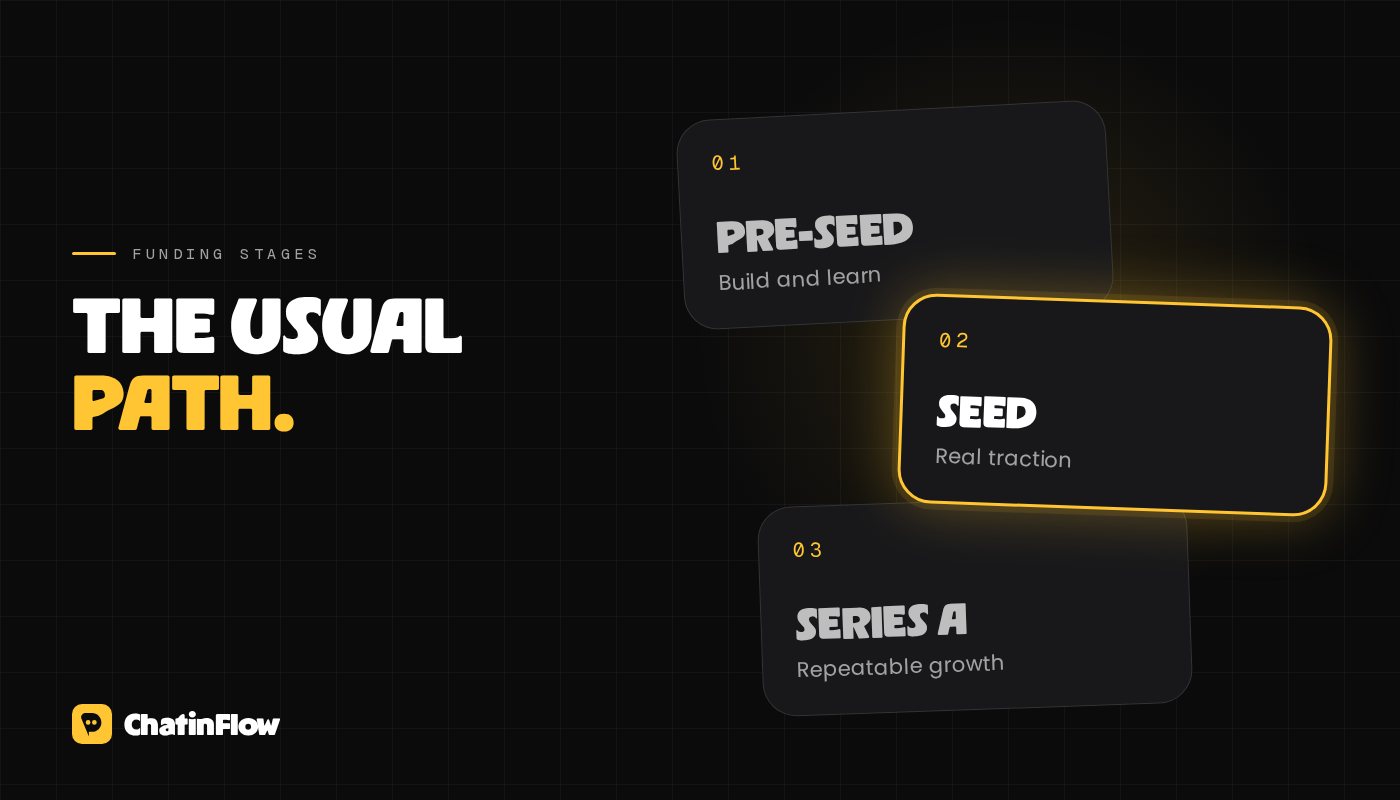
Raising money for a SaaS startup in 2026 follows a well-worn path: a small first round from angels and pre-seed funds, often on a SAFE, to build the product and find early customers; a seed round once there is real traction; and a Series A when growth has become repeatable. What changes your odds at every step is the same short list: a team investors believe in, a problem customers clearly pay to solve, and numbers that show it.
This guide covers whether to raise at all, what investors look for in SaaS, the instruments you will sign, how to build the pitch and run the process, and the mistakes that cost founders the most. It is not legal or financial advice: have a startup lawyer read anything before you sign it.
First: should you raise at all?
Venture money is rocket fuel with a direction attached. Investors in a venture round expect a company that can become very large, and the money comes with dilution, a board and pressure to grow fast. Many good software companies are better off without it.
Alternatives worth considering first:
- Bootstrapping: grow from customer revenue. Slower, but you keep control and ownership.
- Customer prepayment: annual plans paid upfront, or a paid pilot with a first customer.
- Revenue-based financing: a loan repaid from a share of revenue, for companies that already have predictable income.
- Grants and programs for research or regional development, where they exist.
Raise venture money when speed is the advantage: a market where the fastest team wins, or a product that needs a large upfront build.
The stages, in plain words
- Pre-seed: an idea, a prototype or a first version, often with few or no paying users. Money comes from the founders' network, angel investors, pre-seed funds and accelerators. It pays for building the product and learning who the customer is.
- Seed: real usage and early revenue, with signs that customers want it badly. The money goes into finding a repeatable way to win customers and into the first key hires.
- Series A: growth that you can explain and repeat: you know where customers come from, what they cost to win and how long they stay. The money goes into scaling what works.
Labels vary between investors and countries; what matters is the evidence you have at each step.
What investors look for in a SaaS company
The team
At the earliest stage, investors mostly bet on people: why you understand this problem better than anyone, how fast you build and learn, and whether you can sell. A founder who has already talked to fifty potential customers is more convincing than any slide.
The problem and the market
A painful, frequent, expensive problem, for customers who already spend money on it, in a market big enough to build a large company. "Why now" matters too: what changed (a technology, a regulation, a behavior) that makes this the moment.
The numbers
SaaS investors read a common set of metrics. Know yours, and know how each is calculated:
- Recurring revenue: what customers pay you every month, and its yearly equivalent, often called ARR.
- Growth rate: how fast recurring revenue grows month over month.
- Retention: how many customers stay (logo retention) and how much revenue stays (gross revenue retention).
- Net revenue retention: revenue from last year's customers today, including upgrades and minus downgrades and churn. Above full retention means existing customers grow on their own.
- Gross margin: revenue left after the cost of running the service.
- CAC payback: how many months of a customer's gross profit it takes to earn back what you spent to win them.
- Burn multiple: how much cash you burn for each new dollar of recurring revenue.
Before revenue, the equivalents are usage and commitment: active users who come back, pilots, letters of intent, a waitlist of the right customers.
The instruments you will sign
- SAFE (simple agreement for future equity). Created by Y Combinator, now the most common instrument for early rounds. The investor gives money now and receives shares later, when you raise a priced round. The terms that matter are the valuation cap (the most the investor's money will convert at) and sometimes a discount. Y Combinator publishes its standard post-money SAFE forms for free; "post-money" means ownership is calculated after all SAFEs convert, which makes it easier to see how much of the company you are selling.
- Convertible notes. Similar idea, structured as a loan with an interest rate and a maturity date.
- Priced equity rounds. Investors buy shares at an agreed valuation, usually from seed or Series A onwards, with a term sheet covering board seats, investor rights and liquidation preferences.
Read every term, not just the valuation. A higher valuation with unfriendly terms can cost you more than a lower one with clean terms.
Building the pitch
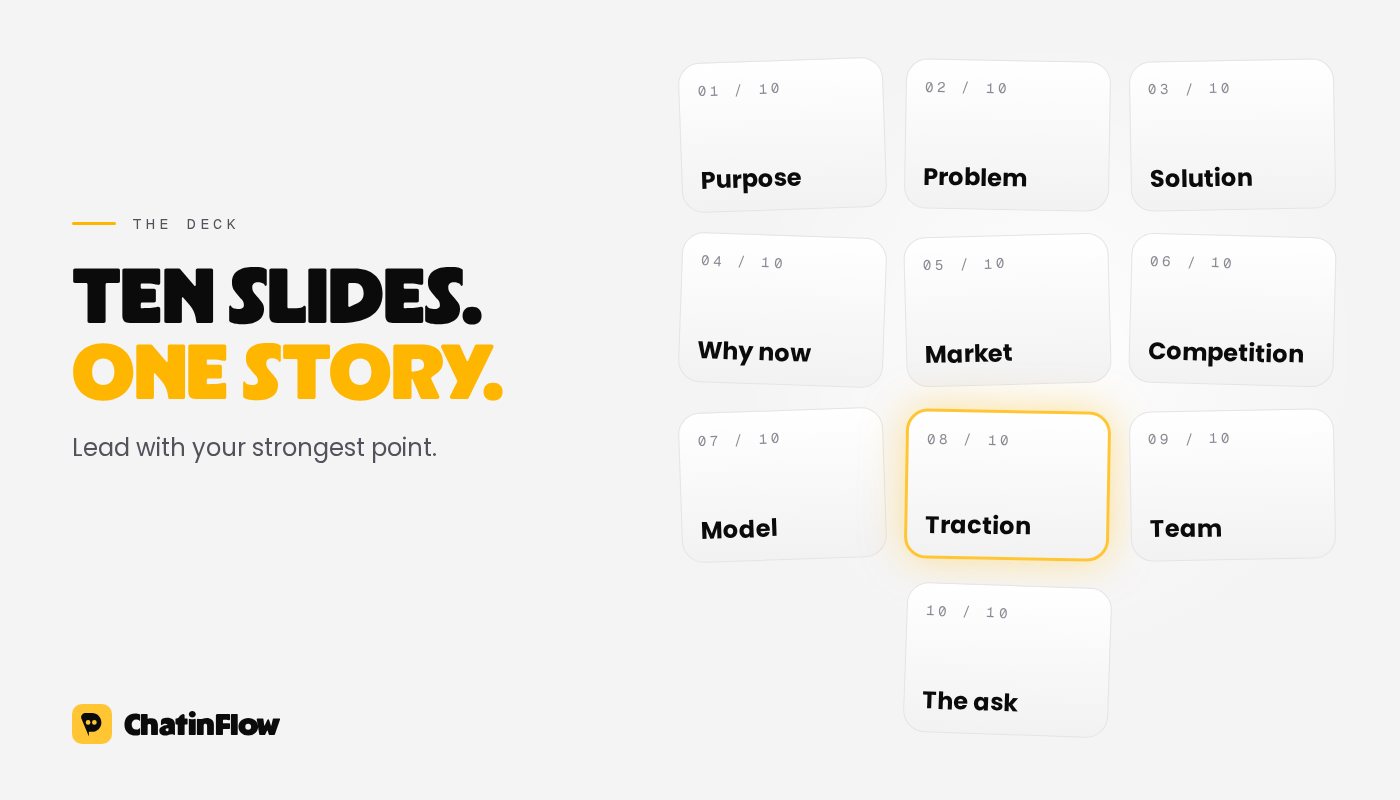
A classic structure, close to the outline Sequoia Capital has published for business plans:
- Purpose: what the company does, in one sentence.
- Problem: who has it and how they solve it today.
- Solution: what you built and why it is better.
- Why now: what changed.
- Market: how big it is, built from real customer counts, not a percentage of a huge total.
- Competition: the alternatives, honestly, and your edge.
- Business model: how you charge and why customers pay.
- Traction: your numbers, with their trend.
- Team: why you.
- The ask: how much you are raising and what milestones it buys.
Keep the deck short, lead with your strongest point, and practice the two-minute version until it is effortless.
Running the process
- Get introductions. A warm introduction from a founder the investor backed, or from someone they trust, gets read; a cold email often doesn't. Paul Graham's essay on raising money makes this point and many others worth reading before you start.
- Talk to many investors in a short window. Interest builds on interest. A compressed process creates momentum; a slow trickle of meetings loses it.
- Treat "maybe" as "no" until it is "yes". Investors rarely say no outright. Keep moving.
- Lead with an investor who sets the terms. Others follow a lead. Smaller checks from angels can fill the round around them.
- Prepare a data room. Financials, metrics, contracts, cap table, incorporation documents. Diligence goes faster when everything is in one place.
- Keep building. The best fundraising slide is the progress you made while fundraising.
Mistakes that cost founders the most
- Raising before talking to enough customers, so the pitch is a guess.
- Optimizing for the highest valuation instead of the right partner and clean terms.
- Ignoring dilution across several SAFEs with different caps.
- Spending months in meetings while the product and the numbers stand still.
- Choosing investors who won't help when things get hard. Ask founders they backed, including the ones whose companies struggled.
Traction is the best pitch
Investors remember numbers that move. For a SaaS company selling to small businesses, that often means proving you can win customers efficiently where they already are: on social media, in messaging apps, in the communities they trust. Our guides to getting your first 1,000 customers and increasing sales are a good place to work on that before the first meeting.
Sources
- Y Combinator, Documents: the post-money SAFE. Checked October 2026.
- Paul Graham, How to Raise Money (2013). Checked October 2026.
- Carta, Your first pre-seed funding round: a founder's guide. Checked October 2026.
- Sequoia Capital, Writing a business plan. Checked October 2026.
By email
New flows, in your inbox.
The flows that work, new playbooks and what changed in ChatinFlow. No spam, and you can leave in one tap.
You may like

Questions and answers
Ask about this post. The ChatinFlow team answers here.
ChatinFlow team
No questions yet. Ask the first one, we answer right here.