A personal brand that sells is not a big following with a logo. It is a reputation for solving one specific problem, shown in public often enough that the right people remember you when they have that problem, plus a simple path from "I like your posts" to "I'd like to pay you". Plenty of people with modest audiences make a very good living this way, because they are known for something and they make it easy to buy.
This guide covers how to build that: positioning, content, proof, the offer ladder, and the conversations that turn attention into income.
1. Decide what you want to be known for
Most personal brands stall because nobody can say in one sentence what the person does. Write yours:
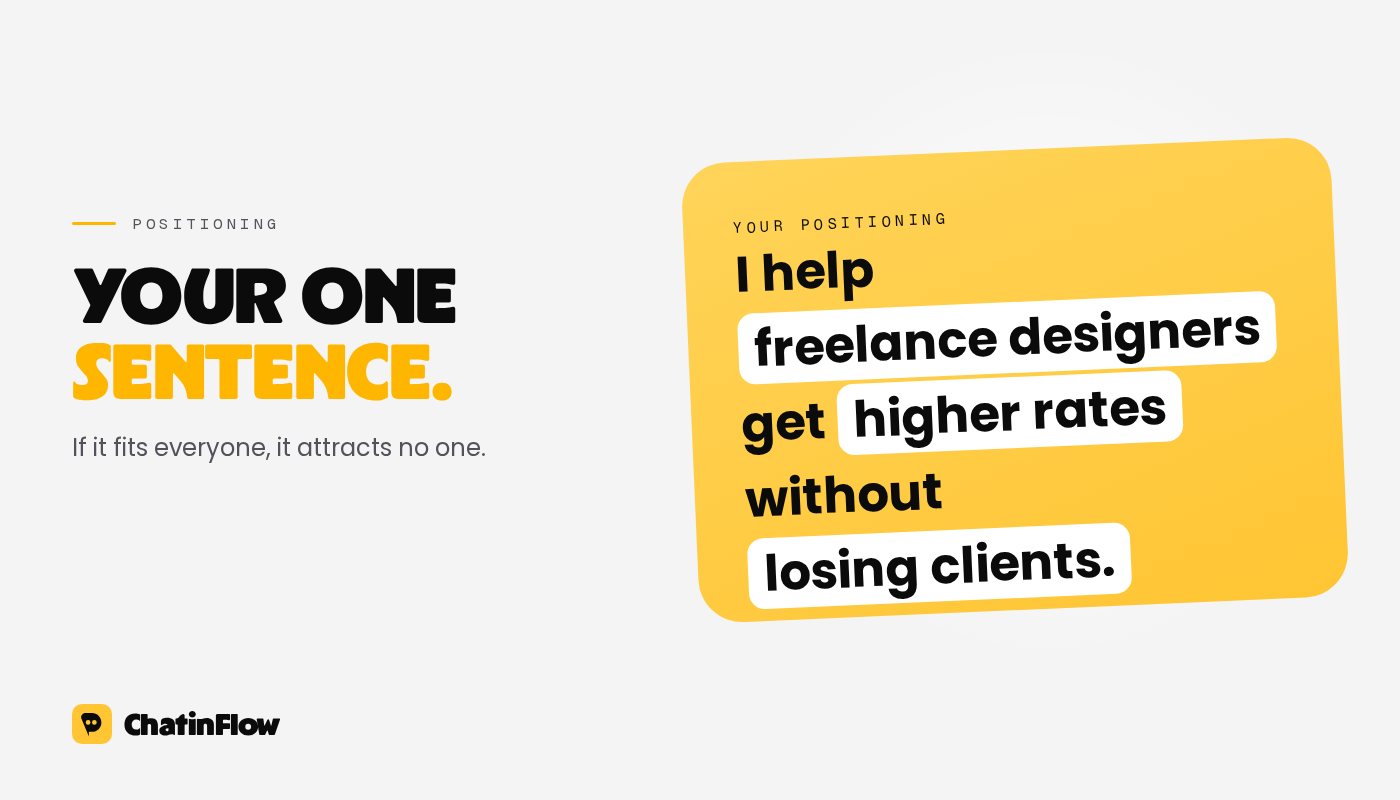
I help [specific people] get [specific result] without [the thing they dread].
"I help freelance designers raise their rates without losing clients." "I help new parents cook healthy dinners in 20 minutes without meal prep Sundays." The sentence should exclude people. If it fits everyone, it attracts no one.
Then check it against three questions: do these people already spend money on this problem, can you reach them where they spend time online, and do you have enough experience (or curiosity) to talk about it for years?
2. Build content around a few pillars
Pick three or four themes that all serve your positioning, and rotate between them:
- Teach: how-tos, frameworks, mistakes to avoid. This builds trust and gets saved and shared.
- Show: your work, behind the scenes, before and after, client stories (with permission). This builds belief that you can do it.
- Tell: your story, your opinions, what you disagree with in your field. This builds connection, and it is what makes people choose you over someone equally skilled.
- Invite: your offers, your free resources, your events. Without this, people never learn how to work with you.
A simple rhythm: most of your posts teach or show, some tell, and a few each month invite.
3. Choose one main platform
Be everywhere, eventually. Start with one place where your audience already spends time and where your format fits: short video on Instagram, long posts on LinkedIn, deep content on YouTube. Master it before spreading out. Reuse the best pieces elsewhere, adapted to each platform.
4. Show proof, honestly
People buy from people who have done it. Proof comes in many forms, and you don't need big numbers:
- Your own results, with what you did step by step.
- Client results, with their permission and their words.
- Work samples, process videos, case breakdowns.
- Credentials and experience, when they are relevant.
Never invent results, followers or testimonials. Audiences notice, platforms remove fake engagement, and one exposed lie undoes years of trust.
5. Build an offer ladder
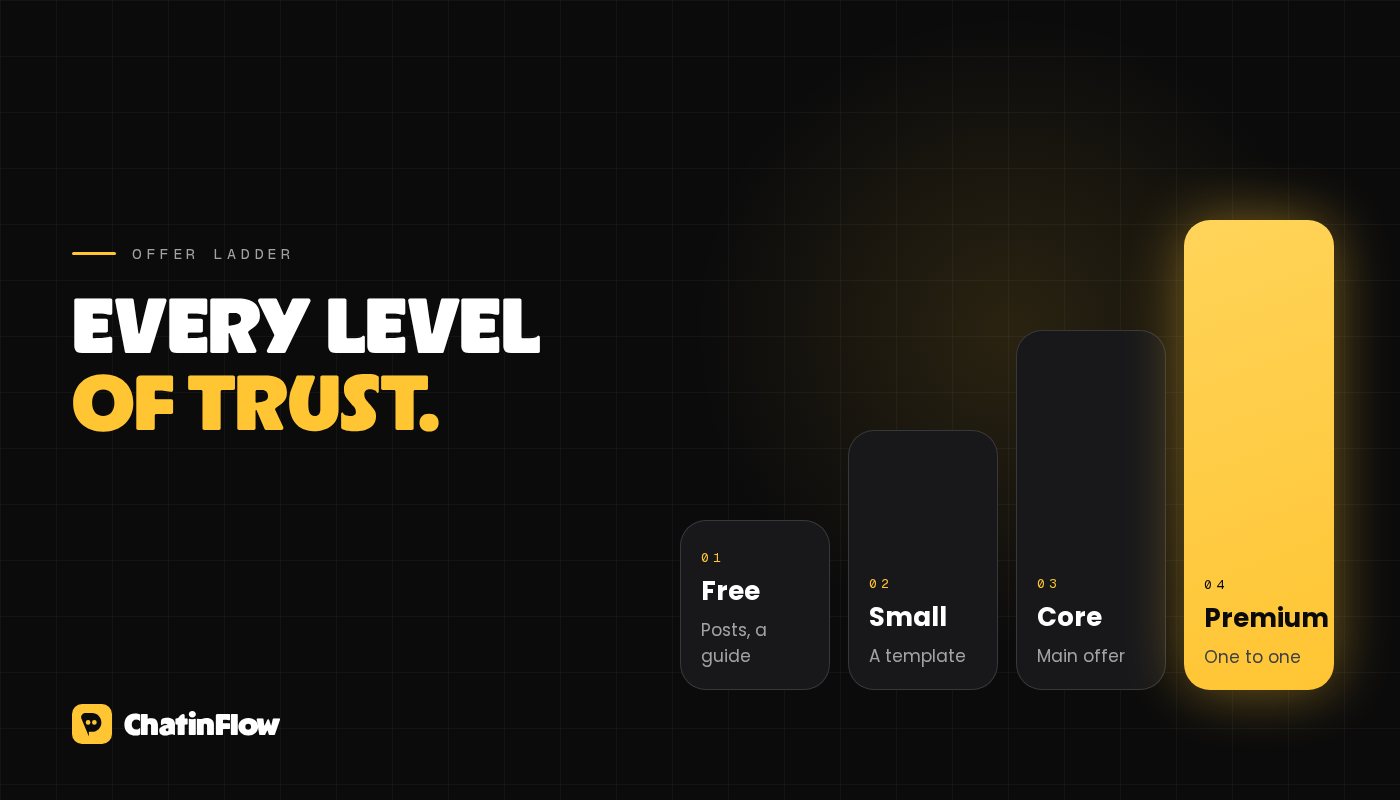
Not everyone is ready to buy your main offer today. A ladder gives every level of trust a next step:
- Free: posts, a newsletter, a free guide or checklist.
- Small: a template, a workshop, a short course. A low-risk first purchase.
- Core: your main product or service, where most of your income comes from.
- Premium: one-to-one work, a mastermind, done-for-you services, for the few who want the most.
Each step should deliver more than it costs and make the next step feel natural.
6. Turn attention into conversations
This is where most personal brands leak. People like your posts, think "I should look into that", and forget. Give them a step they can take right now:
- A comment keyword on posts that teach: "Comment PLAYBOOK and I'll send you the full version." Everyone who comments gets it in their DMs within seconds, with an automation such as ChatinFlow's comment-to-DM flow. See the comment-to-DM guide.
- A question in the first DM: "What are you working on right now?" The answers tell you who is ready for what, and they are your best content ideas.
- A path for each answer: a free resource for people just starting, a product for people stuck on a specific problem, a booking link for people ready for help.
- An email list, so you can reach people when you launch: see grow your email list from Instagram.
Answer the conversations that need you personally. Automate the first reply and the repetitive answers; keep the human part human.
7. Grow through other people's audiences
- Collaborations with people who serve the same audience with a different skill.
- Guest appearances on podcasts, newsletters and lives.
- Speaking at events your audience attends.
- Referrals from happy clients, which you can ask for at the moment they get a result.
8. Measure what matters
Followers are a vanity number for a personal brand. Track instead:
- Conversations started each week (comments with your keyword, DMs, replies to emails).
- Email subscribers added.
- Calls booked or products sold.
- Where each one came from.
If conversations are low, your content doesn't invite enough. If conversations are high but sales are low, look at the offer or the follow-up.
Mistakes that keep personal brands broke
- Being known for everything, so you are remembered for nothing.
- Posting for other creators instead of for buyers.
- Never inviting people to buy, out of fear of seeming salesy.
- Building on one platform only, with no email list.
- Copying someone else's voice instead of using your own.
A personal brand that sells is simple to describe: a clear promise, steady proof, and an easy next step at every level. The rest is showing up long enough for the right people to notice. For creators building income around their brand, read how to make money on Instagram.
By email
New flows, in your inbox.
The flows that work, new playbooks and what changed in ChatinFlow. No spam, and you can leave in one tap.
You may like

Questions and answers
Ask about this post. The ChatinFlow team answers here.
LT CA
Ask a questionAsk a question about this postSign in to askLucas T.
How personal does a personal brand have to be?
ChatinFlow team
Personal enough that people know who they're buying from: your opinions, how you work and what you've learned. You don't need to share your private life.
Chloe A.
Do I need a website to start?
ChatinFlow team
Not to start. A clear profile, a reason to message you and a way to pay are enough. Add a site when people start searching for what you offer.